Showing posts with label Stone Fruit Diseases. Show all posts

Orchard Outlook Newsletter Vol 21, No 17

Wednesday, October 20, 2021


Table of Contents:


  • Fall herbicide application
  • Fall soil pH adjustments
  • Orchard rodent control
  • Reducing the risk of apple scab
  • Peach leaf curl
  • Workshops and conferences for the winter season


Winterizing Orchards


Fall Herbicide Application

Fall is prime germination time for winter annuals, and perennials are susceptible to treatment because they’re actively storing reserves in their roots. Refer to this year's special article 'Fall Weed Control for Winter Annuals and Pesky Perennials' for more information.

Takeaways from the article:

  • Winter annuals like common groundsel, common chickweed, and bluegrass can grow past their treatable stage quickly in spring.
  • Summer and winter annual species have populations that germinate in both fall and spring and therefore troublesome weeds may need to be managed at both times.
  • Bluegrass species should be identified by molecular analysis to inform herbicide choice.
  • Products to manage bluegrass species in young orchards are limited so pre-emerge options should be considered and may need to be applied prior to fall grass germination.
  • After harvest, consider using a post-emerge herbicide to clean up weeds along with a residual product to save time early next season. Orchards without fall application of residual herbicides are expected to exceed weed thresholds in early spring before those treated with residuals.
  • Fall pre-emerge herbicides should be applied to bare ground for uniform control.
  • The majority of weed species by abundance in established orchards are perennials including dandelion, vetch, and wood sorrel. Site preparation is an important first step to limit creeping perennials.
  • After harvest there is an opportunity to treat perennials when they are storing reserves in their root systems before a hard freeze.
  • If planning to apply glyphosate, wait until late spring to avoid translocation to fruit tree root systems.
  • Even if you are not set up to perform weed control in the fall, now is a good opportunity to identify what weed species are present to inform herbicide choices for early next year.
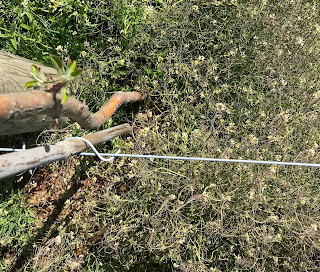
Figure 1: An overhead view of weed cover in the tree row of a young planting on May 14, 2021. The weed cover in the photo is mainly the winter annual shepherd's purse that germinated in the fall of 2020.


Fall Soil pH Adjustments

Soils in the valley are naturally acidic, and nitrogen fertilizers will slowly acidify soils over time. As soils acidify, nutrients such as calcium, potassium and phosphorus are less available for uptake by fruit trees. Other nutrients such as manganese and aluminum become more available and uptake by fruit trees can become excessive.

The pH of orchard soil should be between 5.5 and 6.6 (target 6.0) because nutrient availability is best within this range. Fall is the ideal time to make soil pH adjustments because it gives time for limestone to neutralize the acidity before the next growing season. Also in the fall, the dust from limestone applications will not interfere with growth or bloom.

Recommendations:

  • The results of a soil test will give a lime requirement based on your soil type and pH.
  • Apply calcitic limestome unless magnesium is needed from dolomitic limestone.
  • A surface application of no more than 3 tonnes/ha of limestone in any one year is recommended because higher volumes could be washed away and are ineffective.
  • If the lime is being worked into soil then you can follow the recommended rate on your soil report. Incorporating lime into soil will show benefits sooner than a surface application. A surface application moves down at a rate of about 1 inch per year.
  • If you have ongoing issues with lack of calcium in established plantings, consider banding gypsum at a rate of 4 tons per acre under trees. Annual applications have been shown to reduce bitter pit and senescent breakdown. Gypsum can also improve soil structure and improve water infiltration. Be aware that gypsum can reduce magnesium uptake. Gypsum will not replace the need for lime for pH adjustment.

Orchard Rodent Control

Rodents feed on tree bark in the fall and winter when other food supplies are scarce. The most common issue is when rodent feeding girdles the trunk of young trees at or near the ground surface or at the height of snow accumulation.

Recommendations:

  • Mow ground cover and maintain a weed-free strip to expose mice to predators.
  • Clean up drop apples from the tree row and alleyways to remove attractive food sources.
  • Be aware that using straw mulch can harbour mice.
  • If rodent activity is observed (mouse tunnels, droppings and chewed apples), consider the use of rodenticide. Bait stations manage the risk of poisoning other species and the control is long-lasting.
  • Bait stations placed on the perimeter of the orchard target mice moving into the orchard from bordering fields, fence lines or ditches. Pay particular attention to orchard blocks that neighbour corn and soybean fields.
  • Install tree guards, if feasible, on young trees. Remove after snow melt in spring to avoid fungal problems at the base of the trunks.


Diseases


Reducing the Risk of Apple Scab

Scab spores can be reduced for the next growing season by accelerating the decay of infected leaves in the fall of the current season. The benefit is less disease pressure next spring that can help to reduce the risk of primary scab infections. All efforts to reduce primary inoculum for next year will be helpful for scab control under new fungicide restrictions.

Recommendations:

  • Spraying urea (46-0-0) onto leaves on the ground can reduce spores by about 66%. The recommended rate is 50 kg/ha in 1000 L/ha of water. Alternatively, apply the solution to full trees as leaf fall begins. Urea should be dissolved in warm water before putting it in the tank. The 50 kg/ha rate will supply approximately 23 kg/ha of nitrogen to the ground, so nitrogen application next spring should be adjusted accordingly.
  • Flail chopping all plant matter on the orchard floor in November can reduce the number of scab spores by as much as 85%. Flail chopping in only the alleyway can reduce scab spores by as much as 50%. Why does chopping work? Dr. Gordon Braun explained in a year 2000 publication that:
    • "By chopping up leaves finely, they are more easily broken down by bacteria and molds to be consumed by earthworms."
    • "The apple scab fungus needs to mate with the opposite mating type and smaller leaf pieces reduces the likelihood of the two meeting."
    • "The smaller fragments also fall deeper into the grass and have a greater probability of resting in a position which is less than horizontal which reduces the ability of the ascosopres being successfully discharged into the air currents and carried to susceptible leaves."
  • Using both shredding and urea applications can produce the best results.
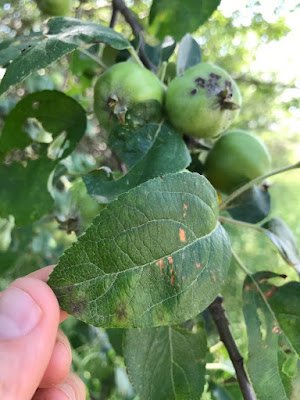
Figure 2: Scab spores can be reduced for the next growing season by using both leaf shredding and leaf urea application in the current season.


Peach Leaf Curl

Peach leaf curl is a fungal disease of peaches and nectarines that is usually well-controlled by a fungicide application in spring or late fall. Infections occur in the spring at bud swell when overwintering spores are washed from the surfaces of the bark. Therefore, a fungicide application prior to bud swell in the spring is preferred. However, occasionally early warm temperatures combined with extended snow cover can make spring applications challenging.

Recommendations:

  • The spores overwinter on the bark, so fall applications for peach leaf curl should be tailored to provide complete coverage of trunks and branches. Fall application should be made after 75-100% of leaf drop has occurred and when the temperature is above freezing.
  • Unusually wet winter weather with heavy rain can wash off a protectant fungicide applied in fall. If residues are washed off, re-treatment in spring before buds swell is recommended. 
  • Chlorothalonil (Bravo) has been the most effective fungicide in Nova Scotia. Only 1 spray of Bravo may be applied per year, meaning it cannot be applied in both spring and fall. Other products registered for control include Ferbam, fixed copper products and Syllit. Note that Ferbam is being phased out and the last date of use is December 14, 2021.
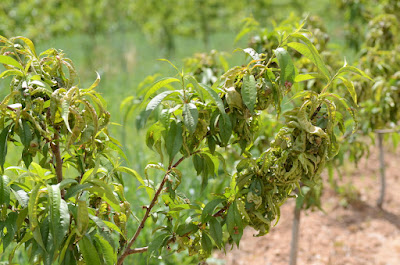
Figure 3: Peach leaf curl infections occur in the spring and can be protected by a fungicide in the late fall or early spring.


Events and Notices

For an ongoing list of events including workshops and conferences for the winter season, visit the ‘Events’ tab on the NS Tree Fruit Blog. At this time, all of the usual workshops and conferences are being planned for in-person venues while following COVID protocols. Here's a snapshot:


Edited by Michelle Cortens, Tree Fruit Specialist
Perennia Food and Agriculture Inc.


Orchard Outlook Newsletter Vol 21, No 8

Tuesday, June 1, 2021


Table of Contents:


Weather
  • 2021 Degree Day Accumulations


  • Apple - Scab
  • Apple - Powdery Mildew
  • Apple & Pear - Fire Blight Blossom Blight
  • Fire Blight - Shoot Blight Management
  • Stone Fruit - Brown Rot, peach scab, and powdery mildew

  • Apple Insects
  • Stone Fruit Insects
  • Pear Insects

  • Weather Conditions for Thinning
  • Apple - Fruitlet Thinning
  • Apple - Nibble/Precision Thinning
  • Track Measurements with Orchard Tools App for iOS
  • Apple - Defruiting Young Trees
  • Pear - Fruitlet Thinning

  • Weed Management
  • Pruning and Training
  • Grafting
  • Planting Trees
  • Nursery Trees
  • Mowing

Pest Management Guides 2021

Events and Notices


Weather


2021 Degree Day Accumulations

The above-average trend continues. Jeff Franklin observes that, "The above-average days have offset the below-average days and we are still 5-7 days above the five and ten year averages."

Figure 1: Heating degree day accumulations for plant (above 5°C) and insect (above 10°C) development from March 1st to May 31st for the past 17 seasons. Provided by Jeff Franklin (AAFC).
  • Approximately 24% more plant development heat units compared to the 5-year average, and 15% more compared to the 10-year average.
  • Approximately 35% more plant development heat units compared to 2020, and 52% more compared with 2019.
  • Approximately 27% more insect development heat units compared to the 5-year average, and 11% more compared to the 10-year average.

Bud Development


An early region on Middle Dyke Road in the Kentville area is monitored to guide this newsletter. There is still plenty of bloom throughout the Valley. The following observations are from May 31st: 
  • Idared buds were at petal fall and measuring an average of 8 to 8.5 mm
  • Honeycrisp was at petal fall and measuring an average of 6.5 mm with still the odd blossom cluster
  • Ambrosia was at about 75% petal fall and measuring 4.5 mm
  • Pears are well into petal fall and measuring 7.5 mm with still some rattail bloom
  • Peaches, and plums are at shuck split
  • Nectarines are at shuck split to 1.5 cm length
  • Cherries are at 1.5 cm length 
Other observations: On late varieties, the cool weather has delayed the progression of bloom. 

Figure 2: Bud development in early regions on May 31st. From left to right: Honeycrisp, pear, and peach.


Diseases


Apple – Scab

For the past week, regions of the Valley have had variable and scattered showers with generally minimal rain until yesterday's event. 

Table 1: Apple scab infection events at the Kentville Research Station from May 25th to June 1st, based on the Modified Mills Table. 


1 For a high inoculum orchard, a significant number of spores can be released during darkness, so begin calculating leaf wetting regardless of the time of day when the wetting event started. An orchard is considered to have a high inoculum load if last season it had 100 or more scabby leaves observed over 600 shoots.
2 Assuming a green tip date of Tuesday, April 14th. Please use this as a guide because microclimates will cause conditions to vary on individual farms.
3 All forecasts are estimates. Observe forecasts daily for more accurate predictions.
Note: The environmental conditions for an infection are listed in the Modified Mills Table.

Recommendations:

  • Wetting is forecast for June 3rd and 4th. With the forecast temperatures at an average of +19.0°C, it would take around 10 hours of leaf wetness for an apple scab infection event to occur, according to the Modified Mills Table. Ascospores are expected to mature to 99.3%.
  • Ensure that tissues are covered with a protectant fungicide prior to an infection event by reapplying on a 7-day interval, with a shorter 5-day interval after wet weather (cumulative 1-2” rain) or rapid tissue growth.
  • Primary ascospores are available for release. There is still some time before it is safe to reduce fungicide spray intervals.
  • Always tank mix single site fungicides with a group M for resistance management.
  • Note that Polyram is being phased-out due to the cancellation of the active ingredient. The last date of use is June 21, 2021.
  • Be careful mixing water soluble packaging (WSP) with other products. Do not use WSP in a tank mix with boron and rinse the tank well before and after boron.
  • Note that the new captan containing product Maestro 80 WSP has re-entry periods that differ depending on the orchard density and activity (anywhere from 2-24 days).


Apple – Powdery Mildew


Recommendations:

  • Where powdery mildew pressure is historically high, a third application is often recommended by petal fall. 
  • Remember to treat young plantings because severe infections can reduce shoot growth, which is most concerning for young, non-bearing orchards.
  • Pay particular attention to susceptible and high-value varieties such as Honeycrisp and Gala.


Apple & Pear – Fire Blight Blossom Blight


Current and Forecast Maryblyt Risk

Alerts have been sent to subscribers by email over the last few days. The most recent alert was sent today on June 1st. An infection is in the forecast for all regions on apples and pears on June 3rd and some regions are at risk sooner on June 2nd. Please check the alert for more details.

This year, all NSFGA-owned weather stations are used for industry alerts. I post screenshots in a folder online to make model predictions easily accessible. Predictions are updated each morning. Access apple and pear predictions and click on the images to expand.


Recommendations:

  • The current forecast predicts that antibiotics will provide two to three days worth of protection.
  • There is plenty of work to do with young trees. Kasumin has only a 12-hour REI and it MUST be applied before the rain in an infection event. Streptomycin has a 7 day REI at minimum.
  • If pinching buds on young trees, leave at least 1-2 warm days for the wounds to heal prior to rain. Do not pinch flowers when tissues are wet, even in a morning dew.
  • Streptomycin and Agral 90 are best applied with little else in the tank to prevent incompatibility issues that would reduce efficacy. However, if manzate is applied it has a spreader-sticker so reduce the use of Agral 90 by at least half to avoid strep burn.
  • Streptomycin 17 will provide excellent efficacy on blossom blight and is best used up to 24 hours prior to an infection event. If necessary, it may be used 20 hours after infection. It is recommended that you keep Strep on the farm at this time of year to respond quickly. Streptomycin 17 may be used up to 3 times each year.
  • Kasumin also has excellent efficacy and may be used up to 4 times each year during bloom. Consider using Kasumin if you need to re-enter a block because it has a short REI of 12 hours. However, the PHI for Kasumin is 90 days, which can be challenging for early varieties like Paula Red. Note that Kasumin is not partially systemic and should not be used for post-infection control or after a trauma event.
  • At bloom, to run the Maryblyt model using your own temperature, rainfall, bloom and spray dates, download the Maryblyt desktop software
    • Need a refresher on how to use Maryblyt? Watch the 2020 Perennia Maryblyt video tutorial
    • This year you can use the daily max and min temperature data from the NSFGA weather stations to run Maryblyt. Do so by logging in to the NSFGA account on www.weatherlink.com, choose the weather station, select the tab "data" and then choose the view "Monthly Summary". Enter the given values into Maryblyt.
  • For on-farm nurseries, consider applying a copper product at the lowest labeled rate prior to training trees and follow the labeled REI. Make cuts on only dry and sunny days. 


Fire Blight - Shoot Blight Management

The material prohexadione calcium is not an antibiotic, has no direct activity on the fire blight organism, and has no effect on blossom blight incidence. However, application of Apogee thickens the cell walls of treated shoots. This effect makes it difficult for the fire blight pathogen to invade shoots, and treated shoots become much more resistant to the spread of fire blight infection. In addition to shoot blight suppression, the application of Apogee at the correct timing also results in a reduction of terminal growth in apples by 30-40%.

Recommendations:

  • At least one infection event was already possible during bloom and another infection approaches. If a blossom blight infection occurred on unprotected flowers, prohexadione calcium is a tool known to slow down bacterial spread in the tree and may buy some time before bacteria reach the leader.
  • The timing of the first application at 2.5-7.5 cm of new shoot growth is critical to success. Follow up with a second application applied around 14 days later. When Apogee/Kudos are applied after 10 cm of new shoot growth, the vegetative growth reduction is less but the product will still provide fire blight suppression.
  • Apogee should be put on with higher water volumes to cover all new leaves and growing tips.
  • Include Agral 90 at 500 mL per 1000 L of water. Do not exceed this amount of surfactant. 
  • If applying Agral 90 there may be a risk of burn if using Captan.
  • Apogee should also be applied with spray grade ammonium sulphate (AMS) in an equal 1:1 ratio with the amount of Apogee used (e.g. 500 g Apogee = 500 g or 0.5 L of ammonium sulphate). This is not the blossom thinning product ammonium thiosulphate (ATS)!
  • Apogee/Kudos inhibit the biosynthesis of the plant growth regulator gibberellin. When gibberellic acid sprays such as Promalin or Accel are applied in the same season, loss of efficacy may occur for either product.


Stone Fruit – Brown rot, peach scab, and powdery mildew


Recommendations:

  • Fungicide protection from brown rot should be maintained during periods of warm, wet weather. 
  • The new formulation of Captan limits the number of applications to one per year on stone fruit.
  • Peaches are susceptible to peach scab infections from shuck fall to 4-6 weeks before harvest. Symptoms are visible on the bark. The shuck fall application is particularly important for disease control. Periods of wet weather will require additional applications until 4-6 weeks before harvest.
  • Monitor for signs of powdery mildew on fruit at 1⁄4 inch size and refer to the Stone Fruit Management Guide.

Insects


BE RESPONSIBLE FOR POLLINATORS – DO NOT SPRAY INSECTICIDES DURING BLOOM!

  • If you were unable to treat tarnished plant bug, spring caterpillars, rosy apple aphid, and European apple sawfly prior to bloom you will have another opportunity at petal fall/calyx.
  • Fungicide, antibiotic, and growth regulator sprays are best applied early morning or late evening when bees are not actively foraging. Be aware that dandelion blooms are open until about dusk.


Apple Insects


In anticipation of upcoming petal fall, pesticide options are listed in Table 2. Registered insecticide options and label rates for calyx stage of apples are listed in the Pome Fruit Management Guide.

Table 2: Pesticides options for calyx stage of apples in Nova Scotia (revised May 2021) with input at original publication from Erika Bent (APM). Products are rated from 1 (poor) to 4 (excellent).


  • Monitor for white apple leafhopper. Sevin XLR applications on mature blocks will control leafhopper but monitor non-bearing plants for leafhopper. If treatment is required, a neonicotinoid, Sivanto Prime, or Exirel would control leafhopper and also pick up aphids.
  • Monitor for rosy apple aphid and green aphid. In young trees the aphids can disrupt shoot growth. Monitor nursery plantings as well.
  • Stay tuned for the codling moth biofix date and degree day model predictions for treatment. Dr. Suzanne Blatt reports that forecast nighttime temperatures above 12°C will encourage moth flight.


Stone Fruit Insects


Recommendations:

  • Treatment for PC should be applied before shuck split to obtain optimal control. Treat between petal fall and shuck split. A second application is usually needed about 10 days later.
  • The insecticides available for managing plum curculio include Assail (Neonicotinoid) and Exirel (Diamide). The neonicotinoids kill plum curculio on contact, and they are also systemic so they deter egg laying and feeding. Their systemic activity will also kill eggs and larvae that are present in the fruit.
  • Plum curculio will target apples if stone fruit are nearby.
  • Be aware of bee toxicity warnings on pesticide labels and take precautions while nearby crops are in bloom.
  • Monitor mite and aphid populations. Prolonged feeding especially in early- to mid-summer can affect next year’s fruit set.
  • Tarnished plant bug and stinging bugs cause catfacing of peaches. This stinging takes place around shuck split/fall and one to two insecticide applications may be required to reduce the incidence of catfacing if pressure is high. Apply one to two applications of one of the pyrethroids listed in the Stone Fruit Management Guide. Repeat treatment in 5-7 days if additional stings are detected.


Pear Insects


Recommendations:

    • If you are planning to use Agri-Mek + Oil for pear psylla control, it is best to apply it at petal fall or ideally within 2 weeks. Agri-Mek has better residual control when applied to younger tissues. Do not apply Agri-Mek with any bloom around as this product is highly toxic to bees. Do not use Captan/Maestro as a fungicide for pear scab within 14 days of Agri-Mek + Oil. Minecto Pro (Abamectin and Cyantraniliprole) is a new formulation that is registered for control of pear psylla with the same recommended application time.
    • Pear rust mite can go unnoticed until heavy russeting extending from the base to the top of the fruit. Growers that apply Agri-mek for pear psylla control would also obtain pear rust mite control. Nexter or Envidor would be other options for pear rust mite control.
    • Stay tuned for codling moth biofix and degree day model predictions for treatment timing.

    Chemical Thinning


    Weather Conditions for Thinning

    Weather influences tree sensitivity to chemical thinners. The weather 2 days before and more importantly the 4 days after applying thinners determine thinner response. The relationship has been explained in terms of the carbohydrate status of the tree. During sunny days the tree is photosynthesizing unimpaired and when matched with cool nights (<18°C) it is respiring slowly, meaning carbohydrates are plentiful. Reversing the conditions, cloudy days impair photosynthesis and when coupled with warm nights the respiration uses many carbohydrates making them in short supply, causing stress to weak fruitlets.

    This week's outlook for thinner activity:

    This week weather conditions are not expected to have a significant influence on chemical thinner performance based on the current Environment Canada weather forecast (Figure 3). Some observations are listed for more detail:
    • Daytime temperatures are mostly in the range of 21-24°C for several days meaning that chemical thinners should work predictably in these ideal temperatures. Temperatures are expected to increase by week end so stress could increase thinner activity.
    • If we experience the rainy periods, the slow drying conditions will increase absorption of chemical thinners and result in added thinning activity.
    • Mainly cloudy conditions are expected to reduce photosynthesis. 
    • Cool nights below 18°C will slow respiration and reduce the stress. 
    • Overall, weather conditions suggest applying the standard chemical thinner rate but by the week end re-evaluate if conditions are hot because thinners become more active during warm trends. Note that Fruitone, MaxCel, and Sevin product labels warn against application in hot conditions.
    • These observations are based on weather only. Adjust based on other factors on your farm and use in the context of your own experiences.

    Figure 3: The Environment Canada 7-day forecast at the time of publication used to provide some predictions for thinning activity. Consider this an example and adjust practices based on the most recent forecast weather conditions.


    Apple - Fruitlet Thinning

    • Weather conditions have not been consistent for pollination between varieties and regions. Conditions were cool when late varieties achieved full bloom at the end of last week. Evaluate your fruit set on different varieties early to inform thinning decisions.
    • The optimal temperature for thinner activity is between 21-24°C (within fruit sizes of 5 to 18 mm and most effective from 7-12 mm). Note this week's outlook for chemical thinner activity in the above section.
    • Focus your chemical thinner in the top 2/3rds of the tree.
    • In the US apple production regions, the carbohydrate model recommends adjusting the usual chemical thinner program by plus or minus 30% depending on the carbohydrate status of the tree (explained in the above section). Adding a surfactant or PureSpray Green oil at 1% is also considered a way to increase the aggressiveness of a thinner on hard-to-thin varieties. Take caution using PureSpray Green oil on varieties that are easy-to-thin like Ambrosia.
    • Note that the PHI for Sevin is 75 days and this may be challenging for early varieties like Paula Red. The REI is 0.5-17 days depending on the activity. For a comparison between products, review the Thinning and Growth Regulation Guide.
    • When using Sevin in high density orchard do not exceed 3.22 L of product/ha/year. In low density orchard do not exceed 2.15 L of product/ha/year.
    • Varieties prone to biennial bearing that had a low crop load last year should be thinned adequately and early enough this year to enable bud initiation (for Honeycrisp this is within 45 days after bloom). Thin to escape the biennial bearing cycle!


    Apple - Nibble/Precision Thinning

    • Sevin is a mild thinner, and for this reason it is a good option for early thinning with the opportunity to thin again later when fruit set is more clear. Even in cases where fruit set is low, consider applying Sevin to take off the weak fruit that would not set good fruit. 
    • If you would like to try the nibble/precision thinning approach, consider using the Predicting Fruitset Model to receive feedback on how many fruit will drop or persist in response to a chemical thinner application. Tracking the fruit growth rate in real-time will buy time and confidence to thin again before the chemical thinning window closes.
    • Select high value blocks to monitor fruitlet diameter using a digital caliper on 75 fruitlets. Flag at least 15 clusters across 5 representative trees and number the fruitlets (1 to 5). Take the first measurements four days after a thinning application or no earlier than the 6 mm stage. Continually measure size over time every 4 days and input results into the model. Contact me for guidance and questions.
    • If you don't want to commit this year, then try a sample to become familiar with the process. Monitor 5 clusters using a digital caliper every 4 days.


    Track Measurements with Orchard Tools App for iOS

    The Orchard Tools by Perennia is available for iPhones, iPods and iPads. It is a tool to help record measurements that will inform your thinning decisions! Easily track the diameter of king fruit. Also, enter the fruit diameter for each fruit in the cluster over time. The data can be exported and then pasted into the Predicting Fruitset Model. There is no need for cellular data or internet while recording. Available for download from the App Store.

    Tutorials will get you up and running:


    Apple - Defruiting Young Trees

    • Defruiting young trees can be accomplished with a combination of Sevin XLR at 2.5 L plus Maxcel at 5.0 L per 1000 L of water applied using dilute nozzles to the point of drip. 
      • A few litres of oil (10.6 L/1000 L water) can also be added as a spreader sticker to this combination unless the variety is sensitive to oil (avoid Gala, Ambrosia, Golden Delicious, Red Delicious). 
      • This mixture should cover more than an acre of young trees. 
      • Apply from petal fall until 8-10 mm. A second application can be done before 18 mm if additional thinning is needed. A second application will likely still miss some fruit so consider that hand thinning may still be required.
    • Choosing to use Fruitone (NAA) in this mixture instead of Maxcel will result in chemical pinch at the terminal bud that stunts growth.


    Pear - Fruitlet Thinning

    • The Maxcel thinning window is 8-14 mm and early treatments are most effective. Note that pears are within or quickly approaching this opportunity.


    Horticulture


    Weed Management

    • Remember the importance of weed control in nurseries and young plantings. Management practices now will impact the outcome of the final tree. Encourage the growing point to be successful.

    Pruning and Training

    • Summer pruning is the next best opportunity if pruning is not complete by bloom.
    • Train and support young trees as soon as possible. Work in dry weather especially if the block has historically high risk of fire blight. Consider using Kasumin for fire blight protection if a short 12-hour REI is needed.
    • Newly planted trees should be pruned for tree structure and supported as early as possible after planting. Prioritize trees that are known to be brittle at the union, including many of the new Geneva rootstocks (G.11, G.41, G.16 etc).

    Grafting

    • The practice can be done as long as bark is slipping, which may extend into summer.

    Planting Trees

    • Ensure that deer fencing is installed as soon as possible to protect new growth on young trees. Deer are browsing young plantings and causing damage. Thiram is no longer an option to deter feeding while the fence is being installed. Another deterrent product called Bobbex is available for nonbearing trees.

    Nursery Trees

    • For bench grafts, leave some shoots on the rootstock to feed the scion as the callus tissue develops. Locally, rootstock leaves have been stripped when the scion has 8-10 leaves. Early in the season, leave at least an extra scion leader for insurance.

    Mowing

    • Keeping the orchard floor cover mowed pre-bloom will minimize dandelion flowers that attract bees, which increases the safety of insecticide applications.

    Pest Management Guides 2021

    The pest management guides are available online for download. All changes new to 2021 are made in red text.

    Events and Notices

    For upcoming events, visit the ‘Events’ tab on the NS Tree Fruit Blog. Specific events will be described here when available.


    This Orchard Outlook has been published with the input of the Orchard Outlook Committee
    Edited by Michelle Cortens, Tree Fruit Specialist
    Perennia Food and Agriculture Inc.


    Orchard Outlook Newsletter Vol 21, No 4

    Tuesday, May 4, 2021


    Table of Contents:


    Weather
    • 2021 Degree Day Accumulations
    • More Weather Stations in the Valley


    • Apple - Scab
    • Apple - Powdery Mildew
    • Apple - Fire Blight Prevention
    • Stone Fruit - Brown Rot Blossom Blight
    • European Red Mite
    • Pre-Bloom Insecticides

    Weed Management

    • Pruning
    • Fertilizing
    • Liming
    • Planting Trees
    • Nursery Trees
    • Mowing

    Pest Management Guides 2021

    Events and Notices

    • NSFGA Research Survey
    • Canada GAP Version 9.0 Updates


    Weather


    2021 Degree Day Accumulations

    The above-average trend continues. Temperatures have cycled in March and April to sometime give the illusion that it hasn't been very warm. But Jeff Franklin describes that the averages tell the story. The average temperature for March 2021 is 1.35°C compared to the 20 year average of -0.62°C. The average temperature of April 2021 is 7.16°C compared to the 20 year average of 5.59°C.

    Please note that due to an IT problem, the degree day accumulations this week are updated to only May 1st, but the issue should be resolved by next week.
    Figure 1: Heating degree day accumulations for plant (above 5°C) and insect (above 10°C) development from March 1st to May 1st for the past 17 seasons. Provided by Jeff Franklin (AAFC).
    • Approximately 61% more plant development heat units compared to the 5-year average, and 55% more compared to the 10-year average.
    • Approximately 147% more plant development heat units compared to 2020, and 47% more compared with 2019.
    • Approximately 80% more insect development heat units compared to the 5-year average, and 64% more compared to the 10-year average.


    More Weather Stations in the Valley


    On track to finish installation this week!

    The Nova Scotia Fruit Growers’ Association through federal and provincial funding with the Nova Scotia Department of Agriculture has embarked on a smart farm demonstration project to install and maintain weather stations. 

    At the time of this newsletter, eight of the ten weather stations are operational. The Grand Pre location was installed this morning and the Windsor location is being installed this afternoon. Other operational stations include: Atlanta, Aylesford, Grafton, Melvern Square, Mochelle, Morristown, and Woodville. Jon Bent is planning to install the final station in North Medford on Wednesday morning.

    This is a reminder that any weather stations on the Davis WeatherLink platform that do not have "NSFGA" in the name are not being maintained under this project. 

    Resources

    Historical weather data is a feature of a paid account so NSFGA members and their advisors have access. On April 22nd, Candy sent the login information to members. If you’re not a member, you can access the live/current weather data by creating your own free account on Davis WeatherLink. Search for weather stations and add them to your account.

    Bud Development

    An early region on Middle Dyke Road in the Kentville area is monitored to guide this newsletter. Over the last week the leaves have started to unfurl into the tight cluster stage. On May 3rd, the Idared buds were at the stage of tight cluster, Honeycrisp was at early tight cluster, and Ambrosia was at half-inch green. Stone fruit are in bloom or approaching bloom. With the extra degree day accumulations this year, bud development is progressing quite early.

    Figure 2: Bud development in an early region on Middle Dyke Road in Kentville on May 3rd. Shown from left to right: Idared, Honeycrisp, Ambrosia.

    Orchard Outlook committee members reported that Honeycrisp in later regions are generally around late half-inch green to early tight cluster. Pear stages are also variable but on average are between bud burst and green cluster stages.

    Diseases


    Apple – Scab


    Table 1: Apple scab infection events at the Kentville Research Station from April 28th to May 4th, based on the Modified Mills Table. 

    1 For a high inoculum orchard, a significant number of spores can be released during darkness, so begin calculating leaf wetting regardless of the time of day when the wetting event started. An orchard is considered to have a high inoculum load if last season it had 100 or more scabby leaves observed over 600 shoots.
    2 Assuming a green tip date of Tuesday, April 14th. Please use this as a guide because microclimates will cause conditions to vary on individual farms.
    3 All forecasts are estimates. Observe forecasts daily for more accurate predictions.
    Note: The environmental conditions for an infection are listed in the Modified Mills Table.

    Forecast and Perspective

    A period of rainfall is currently forecast for Wednesday, May 5th. With the forecast temperatures at an average of +11.5°C, it would take around 12 hours of leaf wetness for an apple scab infection event to occur, according to the Modified Mills TableNote that ascospores are now maturing more rapidly and that 12% of the total spore load has matured since the last infection event. 

    The heat is also speeding up ascospore maturity. For perspective, at this time last year only 5% of ascospores had matured.

    Recommendations:

    • Apply a protectant fungicide to green tissue prior to an infection event and reapply on a 7-day interval, with a shorter interval after wet weather (cumulative 1-2” rain) or rapid tissue growth.
    • Vigilant protection of primary scab will prevent the challenges that come with chasing secondary scab. Secondary scab will be increasingly challenging with upcoming product discontinuations.
    • Always tank mix single site fungicides with a group M for resistance management.
    • Note that Polyram is being phased-out due to the cancellation of the active ingredient. The last date of use is June 21, 2021.

    Special notes on products containing Captan and water soluble packaging:

    • The product formulations Maestro 80 DF and Supra Captan 80 WDG are being phased-out. The last date of use is May 10, 2021 and it is fast approaching. The PMRA identified issues with the dry flowables in terms of applicator exposure when mixing and loading. Studies show that water soluble packaging (WSP) reduces handler exposure so it’s an acceptable risk mitigation measure. There are new registrations for the formulations Supra Captan 80 WSP and Maestro 80 WSP.
    • Water soluble packaging has been used in the past but now we are looking at more frequent use. Consider these best practices:
      • Make sure packets fully dissolve and disperse before adding other products. Packets dissolve faster in warm water than cold water, like dishwasher pods. 
      • Check the filter after the first use and every couple of uses.
      • Be careful mixing. Do not use WSP in a tank mix with boron and rinse the tank well before and after boron.
    • If you plan to use oil for European Red Mite control, Captan should be avoided within 7-14 days of an oil application.
    • Note that the new captan containing product Maestro 80 WSP has re-entry periods that differ depending on the orchard density and activity (anywhere from 2-24 days).

    Apple – Powdery Mildew

    Typically, conidia are released around the tight cluster stage. Powdery mildew infections can be expected when conditions are warm (10-25°C), humid and dry.

    Fungicide resistance management for scab vs powdery mildew:

    Scab: The Group M fungicides (mancozeb and captan) provide scab control so tank mixing them with single-site fungicides is a great strategy to slow resistance development in the apple scab population. Most populations of apple scab are resistant to Group 3 fungicides Nova and Fullback so the products are not expected to provide control. A full rate of a protectant fungicide is necessary for scab control.

    Powdery mildew: Group Ms do not have activity on powdery mildew so they will not help prevent powdery mildew resistance development. Products in the groups 3, 7 and 11 are registered for control of PM. Resistance to group 11 products was reported in a survey in 2013. Therefore, whenever the remaining groups 3 & 7 are used, careful consideration must be given to rotating the groups to slow resistance development. Avoid more than two consecutive applications of a single group.

    Recommendations:

    • Do not apply a product for powdery mildew before a heavy rain is expected. The product will wash off, plus powdery mildew spores will not germinate on a wet leaf surface anyway. As opposed to scab, powdery mildew protection should go on prior to a period of warm and dry weather when infections are expected.
    • Application of a protectant mildew fungicide at tight cluster prevents infections of leaf clusters. Timely application early in the season will reduce the risk of secondary infections. 
    • Remember to treat young plantings because severe infections can reduce shoot growth, which is most concerning for young, non-bearing orchards.
    • Pay particular attention to susceptible and high-value varieties such as Honeycrisp and Gala.

    Apple – Fire Blight Prevention


    Recommendations:

    • For on-farm nurseries, consider applying a copper product at the lowest labeled rate prior to training trees and follow the labeled REI. Make cuts on only dry and sunny days. 
    • Be cautious when applying post-emergent herbicides to prevent injury to young trees. 

    Stone Fruit – Brown Rot Blossom Blight

    Brown rot infection of the flowers during bloom provides secondary inoculum for fruit infections later on.

    Recommendations:

    • Fungicide protection from brown rot should begin just prior to bloom and be maintained during periods of warm, wet weather. 
    • Rotating classes of brown rot fungicides is key to slow resistance development. There are many options in the management guide.

    Insects

    European Red Mite

    To be most effective, oil application for ERM should be targeted close to egg hatch – around tight cluster and before pink. Conditions have been good for getting oil on so applications should be made soon if not already done. Avoid oil if freezing temperatures will occur within 48 hrs.

    Pre-Bloom Insecticides

    It is still too early for pre-bloom insecticides but with the lead in degree day accumulations this year the time is approaching. Depending on the heat in the forecast, your region, and monitoring reports, action may be needed in a week or two as we approach the pink stage.

    Recommendations:

    • Be on standby and monitor for the spring caterpillar complex, European apple sawfly, tarnished plant bug, and aphids. 
    • Treatments for spring caterpillars should not be applied too early because product must enter the developing flower clusters where the larvae like to feed to be effective. Treatments should be applied pre-bloom so target the full pink stage. Note that there is a lower tolerance for WM than GPM. Green Pug Moth do not feed directly on developing fruitlets.
    • If treatments for OBLR are required at pink, the treatments should also have some activity on WM and GPM. 
    • If a pyrethroid is applied for tarnished plant bug at pink, it will also have activity on WM and GPM. Similarly, pyrethroids are expected to have some activity on EAS if being applied for other pests.
    • As a reminder, pyrethroids are best used at moderate temperatures (20°C or less) and are harsh on beneficial insects and predator mites. They should only be used where potential losses justify their application.
    • In orchards with a history of damage and high numbers of European apple sawfly catches, an application of Altacor, Assail, Calypso, or Exirel at full pink is recommended to control the adults prior to egg laying.
    • If history of tarnished plant bug damage indicates that pressure is moderate to high, an application of insecticide at full pink can be beneficial.

    Weed Management

    Studies have shown maintaining weed free strips from bud break to 30-days after full bloom has the greatest impact on tree growth and yield. Timely herbicide application will ensure you make the most of the weed free window.

    Recommendations:

    Residual Herbicides

    • Spring is an ideal time for using residual weed control products and they offer a much longer weed control period than post-emergent products such as Ignite and Glyphosate.
    • Note the differences in the application directions for the residual herbicides Chateau and Alion. 
      • Chateau can be applied to young trees (note specific label directions). Chateau should not be applied after budbreak unless application equipment is shielded to prevent crop injury. 
      • On the other hand, Alion can be applied only to mature orchards with trees established for 3 growing seasons. Alion can be applied anytime throughout the growing season (note specific label directions).
    • When mixing residual herbicides, agitation is important to keep the product in solution. If the herbicide settles in the tank then it can be delivered in a high concentration and possibly result in crop injury.
    • Note that residual herbicides can damage single tree replacements. 
    • If weeds are already present, consider adding a post-emerge to a residual herbicide to achieve control.

    Post-emerge Herbicides

    • Some of the perennials are at a susceptible stage now and this is a good management opportunity if you didn't get to them last fall.
    • Take time to allow concentrated products like Roundup to mix into the solution before adding other products.
    • Be careful with tank mixing herbicides. At the Orchard Outlook committee, there was a report that the mixture of Roundup Transorb and 2,4-D Amine herbicide can form a white precipitate. New formulations may behave unexpectedly. If in doubt, consider performing a jar test to test compatibility. The jar test is described in a post by Sprayers 101.

    Horticulture

    Pruning

    • If pruning is delayed, plan a strategy to get the most value for your time. Prioritize young blocks and high value varieties and return to low value areas. This strategy is especially important considering the new captan limitations.
    • Ensure that youngest blocks are pruned first so growth is directed into desirable leader and terminal extension. Prune early to encourage vigour or delay pruning to remove vigour.

    Fertilizing

    • Bud break to bloom is the ideal time for granular fertilizer application to maximize tree growth.

    Liming

    • Be cautious applying lime to orchard blocks now that green tissue is progressed. The force of the lime from the spreader can damage the leaf tissue and buds. The next best opportunity to apply lime again is in the autumn.

    Planting Trees

    • Newly planted trees should be pruned for tree structure and supported as early as possible after planting. Prioritize trees that are known to be brittle at the union, including many of the new Geneva rootstocks (G.11, G.41, G.16 etc).
    • Remember to document the quality of your nursery trees with pictures and notes. Did trees dry out? Any signs of disease (cankers, crown gall)? How do the roots look (rinse and take a photo)? Notify the appropriate people of issues you notice. Record the date of planting. An issue that shows up after planting is much easier to diagnose or prevent given this information.
    • If fumigating in the spring, observe the warnings on the label prior to planting to avoid crop injury. Leave the soil undisturbed for 10 to 14 days or longer in wet weather. To verify plant safety, follow the safety germination test described on the label for PicPlus.

    Nursery Trees

    • Check on nursery trees because buds have grown quickly from full dormant to quarter inch green very quickly. Rootstock tops should be cut so the rootstock does not overpower the bud.
    • Remember the importance of weed control in nurseries. Management practices now will impact the outcome of the final tree. Encourage the growing point to be successful!
    • If growing your own trees, criticize their quality and don't plan to plant 100% of the trees. Planting small (<4 ft), weak trees will delay production. Trees are typically small for a reason and will continue to be weak trees. Commercial nurseries grade their trees and build in the cost of discarded trees so the same approach is recommended for on-farm nurseries. Tree losses of at least 10% are common.

    Mowing

    • Keeping the orchard floor cover mowed pre-bloom will minimize dandelion flowers that attract bees, which increases the safety of pre-bloom insecticide applications. An early start will help keep the orchard floor under control.

    Pest Management Guides 2021

    The pest management guides are available online for download. All changes new to 2021 are made in red text.

    Events and Notices

    For upcoming events, visit the ‘Events’ tab on the NS Tree Fruit Blog. Specific events will be described here when available.

    NSFGA Research Survey

    Before time and energy is put into considering research proposals or applying to funding programs, direct input from members is needed to establish research priorities and propose research interests.

    The NSFGA Research Committee is asking for your input on this survey to explain what you need or would like to see in terms of research so that we engage in research that is of benefit to growers, packers, and processors. It is important that we get your opinion on what information would benefit you and/or the apple industry. The survey is expected to take less than 5 minutes to complete. Please complete by Tuesday, May 18th. 

    CanadaGAP Version 9.0 Updates

    My colleagues over at the food safety team noted in their most recent newsletter:
    CanadaGAP has released Version 9.0 of the Fresh Fruit and Vegetables Manual and the Greenhouse Product Manual. These new manuals will take effect on April 1, 2021. To download the new manuals, please visit the CanadaGAP website. The audit checklist for version 9.0 is also now available on CanadaGAP’s website. The Frequently Asked Questions (FAQs) have also been updated to reflect version 9.0 of the CanadaGAP manuals and other important changes made to the program this year.


    This Orchard Outlook has been published with the input of the Orchard Outlook Committee
    Edited by Michelle Cortens, Tree Fruit Specialist
    Perennia Food and Agriculture Inc.

    Blog Archive